You know the spot. Third floor of the library, window seat on the left, the one with the outlet that actually works. Or the corner table at that café, where the Wi-Fi is reliable and the barista knows your order before you've said it. Or the kitchen table at six in the morning, before anyone else is awake, when the flat is quiet and the light is grey and soft.
Everyone has a place where focus lives. Finding it is half the work.
Why place matters
We underestimate how much the room shapes the thinking. Not in a vague, tidy desk tidy mind sort of way. In a real, neurological way. Your brain is constantly reading the space, deciding what mode to operate in. The sofa says rest. The library says work. The café, with its background hum and someone else's playlist, says we can make this happen if you bring headphones.
This is why studying in bed never works. It's not a discipline failure. It's a context failure. You're asking your brain to do deep work in a space it has firmly filed under sleep and scrolling. The signal is wrong, and no amount of willpower fixes a wrong signal.
When you find a space that works, where your brain shifts into study mode without a fight, that's something to protect. Return to it. Build your rhythm around it. It's doing more for you than any productivity hack ever will.
The café as sanctuary
The café has become the unofficial study hall of an entire generation. The reasons are more interesting than people give them credit for.
Part of it is practical. Libraries close. Dorm rooms are loud. Home has too many distractions and a fridge that calls to you every forty minutes. The café offers a neutral zone, not home, not school, somewhere in between where you can be anonymous and focused and nobody asks why you've been sitting there for three hours with one oat milk latte.
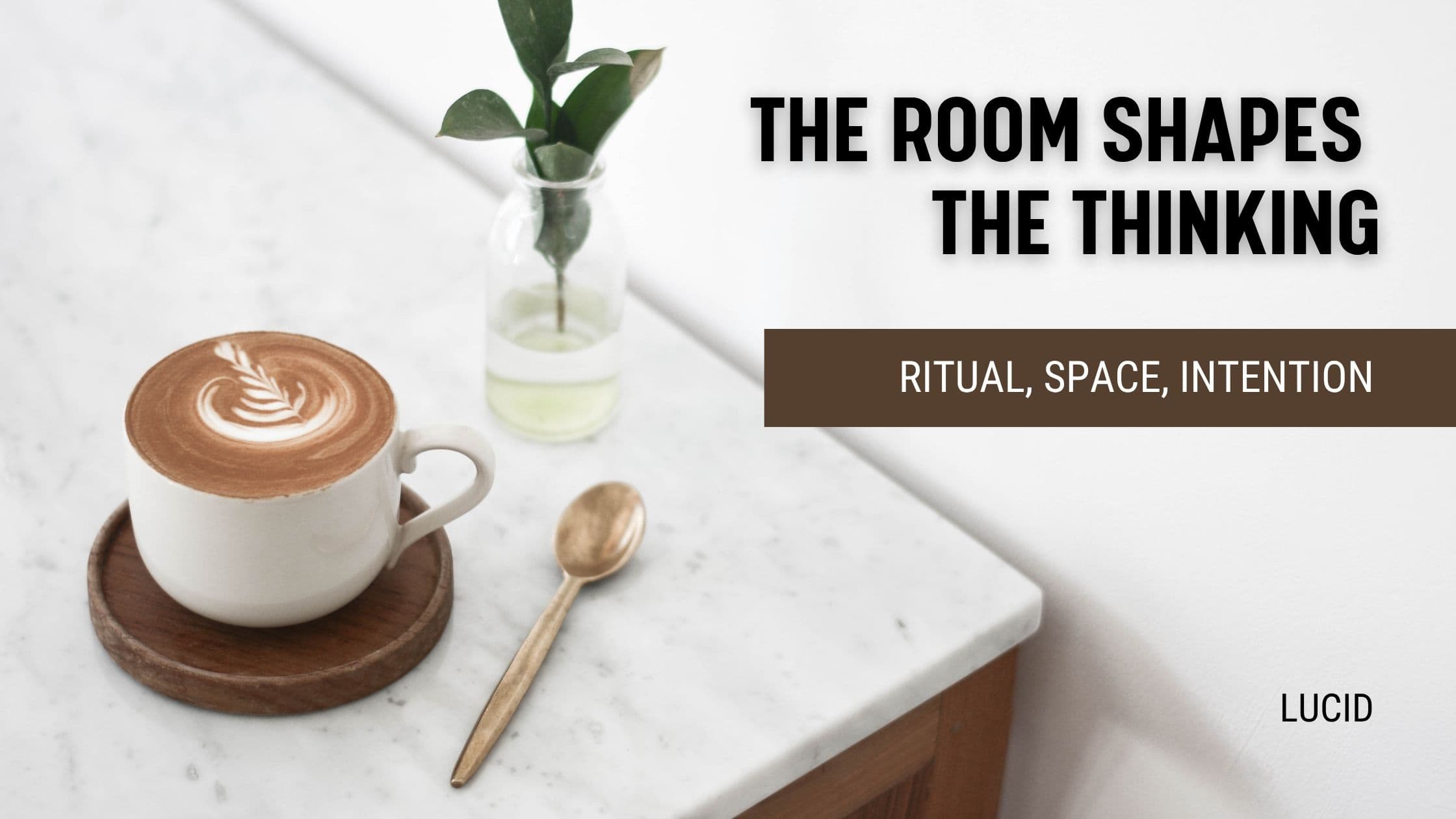
But it's also ritual. Ordering the drink. Finding a table. Setting out your things in that particular way, laptop here, notebook here, phone face-down or in your bag if you're serious today. It's a sequence of small deliberate steps that signal to your brain: we're starting now. The drink isn't fuel. It's ceremony. The first sip marks the beginning of the session.
There's a reason study-with-me videos almost always open with a coffee order. It's not product placement. It's the ritual made visible.
Matcha
Matcha is not coffee. This matters more than it should.
Coffee says I need to power through. Matcha says I'm choosing to be here. The energy is different: steadier, gentler, more deliberate. The matcha latte at 3pm in the library is a quiet statement. I take this seriously, but I'm not frantic about it. I'm here because I want to be.
That's the emotional register of lock in. Not panic. Not hustle. Quiet intention.
The library
Libraries still matter. Despite the apps, the noise-cancelling headphones, the curated home desk with the monitor arm and the succulent. The library remains the most reliable study environment on earth.
Because a library is a building full of people doing the same thing you're doing. There is power in that. Social focus. The quiet accountability of being surrounded by strangers who are also choosing to be here, also choosing to do the work. You don't speak to them. You don't need to. Their presence says this is normal, this is what we do, you belong here.
The best libraries understand this. The good light. The warm wood. The silence that isn't oppressive but generous, the kind that makes space for your thinking rather than demanding you fill it. These aren't design accidents. They're invitations.
Space as part of the plan
When you sit down on Sunday evening to plan your week, the question isn't just what you'll study. It's where. The essay that needs deep thinking? Library, morning, phone in your bag. The problem set that works better with a friend? Café, afternoon, two laptops and a shared table. The reading that just needs to get done? Wherever, headphones on, thirty minutes.
Matching the task to the space takes ten seconds and changes the quality of the session.
The anchor
Your planner is the object that travels between these spaces. The library, the café, the kitchen table at six in the morning. It opens the same way in each one. It holds your week regardless of where you are.
In a sense, the planner is the space. The consistent, calm, considered place you check in with yourself before the work begins. The rooms change. The planner stays.
That's the anchor. That's where focus starts.